

The North Coast 500, or NC500 as it’s commonly referred to, has become one of the world’s most iconic roadtrips. Fire up any “best roadtrips” list on the Internet and, chances are, the North Coast 500 will be on it. With spectacular scenery, historic castles and famous whisky distilleries around every corner, this is everything you could ask for in a driving holiday. A great North Coast 500 itinerary includes all of those things and then some!
We decided to drive the North Coast 500 during the COVID-19 restrictions earlier in 2021. Having had a couple of plans dashed by the lockdowns here in the UK, we wanted something to look forward to. We already had some accommodation booked in Scotland but soon realised that with all the uncertainty in the world, we might as well make the most of our annual leave! So the NC500 dream quickly became a reality!
Disclaimer: This post contains affiliate links. So, if you use them and purchase something, I may receive a small commission at no extra cost to you. As always all opinions are my own and your support is much appreciated.
What is the North Coast 500?
The North Coast 500 is a scenic route around, perhaps unsurprisingly, the northern coast of Scotland. It was launched in 2015 by the North Highland Initiative in a bid to boost tourism and economic growth in the region.
The 516 mile route (NC516 wouldn’t quite have the same ring to it I suppose!) takes in some of Scotland’s most incredible scenery – from pristine beaches to towering mountains – adds a dash of history and adventure before sprinkling in some unique wildlife watching opportunities for good measure.
Today, the North Coast 500 is hailed as one of the world’s best roadtrips and has become an iconic driving route in just a few years. Its success in showcasing the stunning beauty and the communities of the region have already seen it named as one of the greatest moments for Scottish tourism in the last 50 years.
The route starts and ends in Inverness, creating a loop around the northern Highlands, making it a convenient and easy-to-understand route. However, as is usually the case with roadtrips, detours are one of the best ways to get the most out of your NC500 adventure.
How long does it take to drive the North Coast 500?
How long is a piece of string? As with any roadtrip, there are so many things to keep in mind. How long do you want to drive each day? How much do you want to see? Are you obsessed with turning off the main route at every possible opportunity?
First things first. 500 miles on the North Coast 500 is not the same as 500 miles on, say, the Route 66. A lot of the driving (especially once you reach the west coast) takes place on narrow, single-track roads with passing places which can make going pretty slow. It’s almost like the roads are designed to make you take your time and enjoy the spectacular scenery around you.
Secondly, it will all depend on what kind of activities you enjoy. Walking/hiking opportunities along the NC500 are plentiful, for example, and so if I returned, I could easily fill an entire week with hiking and munro bagging alone!
In my opinion, the best way to enjoy the North Coast 500 is by taking your time. You could probably zip around it in 3-4 days but you would be doing a LOT of driving and will not have enough time for stops and sightseeing. We spent 7 days covering the NC500 itinerary in this post but could have easily spent another week on detours alone.
7-10 days hits that sweet spot of seeing a lot and not getting bored/tired of driving. If you have even more time, NC500’s proximity to the Orkney Islands, Skye and the Outer Hebrides creates even more tantalising detour opportunities.

North Coast 500 and COVID-19
Let’s talk about the dreaded C word. While travel restrictions in the UK were lifted just before we embarked on our NC500 adventure in May 2021, businesses were still coming to grips with the various rules imposed by the Scottish government. So, a number of places were either closed or operating with limited hours and/or capacity. We travelled around as majority of Scotland was under Level 3 restrictions. Indoor dining was only permitted until 8pm and alcohol consumption was only allowed outdoors to name a couple. Make sure to check the latest rules and government guidelines around travelling before planning your adventure.
North Coast 500 Itinerary Notes
Before I get to the actual route that we took, there are a few useful things to remember when planning your North Coast 500 trip.
- The route officially starts and ends in Inverness but unlike other famous roadtrips like Route 66, you are not following a single road all the way round. Instead, North Coast 500 is a combination of roads – from busy A roads to tiny single-track lanes. It’s worth remembering that while the NC500 is undoubtedly an incredible roadtrip, it’s also a great bit of marketing. Travellers have used this route for decades – it just didn’t boast a catchy, social-media friendly name!
- Being a loop, your next question may quite reasonably be: “Well which way round do I drive the NC500?”. Well, there is no wrong answer here! Generally speaking, the west side of the trip is a lot more dramatic and has a higher concentration of hikes, sights and detours. This isn’t to say the east coast is any less worthy of your time, but there are fewer reasons to linger. If you go clockwise, you get to the stunning landscapes and single-track roads quicker. If, like us, you go anti-clockwise, you get to save the best till last and the scenery ramps up a bit more gradually. Also, if you are a) not a confident driver, b) not used to driving on UK roads or c) have no idea what single-track roads involve, it might be best to warm up on the more straightforward east coast side.
- As I mentioned before, distances don’t always mean much when driving along the NC500. 100 miles is a BIG driving day here so bear that in mind when planning your stops and booking accommodation. Factor in things like hikes and activities as well as time for unscheduled stops (trust me, there will be MANY).
- Our itinerary was 7 days however I would recommend taking even longer if you have the time. We definitely felt rushed on one of our driving days and there are SO MANY things to see and do. You could realistically drive the NC500 in 5 days which would give you a “whistlestop tour”. Honestly, I wouldn’t recommend it. There is easily enough to see and do here to fill a couple of weeks.
- The NC500 is a very popular route, yet the infrastructure doesn’t always feel like it’s growing at the same pace as the route’s popularity. Many of the communities you will visit are small and remote and so accommodation can get booked up very quickly. It’s important to remember that your itinerary may well be dictated by availability as much as any other factor.
- Finally, planning is all well and good but the joy of driving the NC500 is the stops, detours, roadside viewpoints that take your breath away and the time spent appreciating the incredible scenery. Don’t plan too much, take your time and be spontaneous. This is a roadtrip you will remember forever!
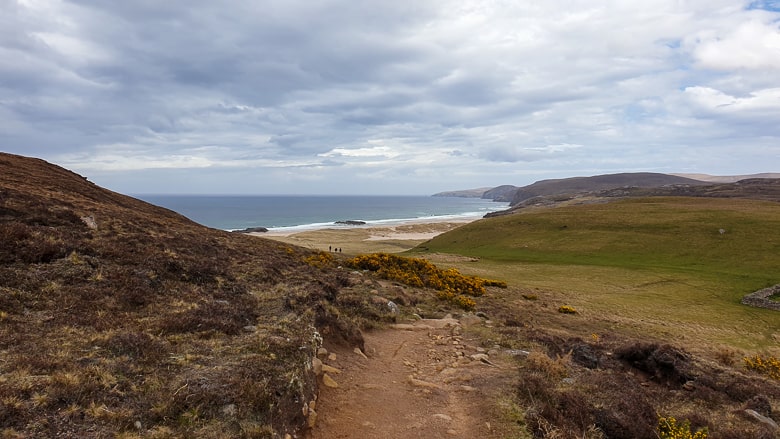
Complete 7 Day North Coast 500 Itinerary
Day 0 – Inverness
Inverness is the start and end point of the NC500 but don’t make the mistake of rushing to leave! The largest city in the Scottish Highlands has plenty to keep the visitors occupied. I would definitely recommend setting aside some time to explore as well as prepare for your North Coast 500 adventure.
Inverness Castle
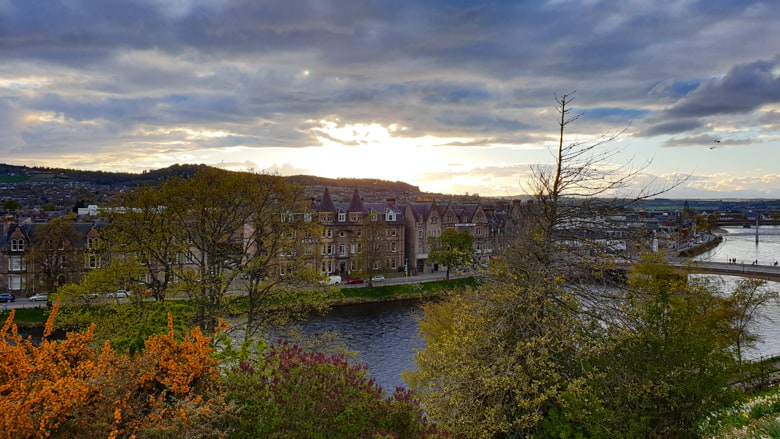
Standing on the banks of the River Ness, Inverness’ location has always been strategically important for trade and political reasons. There are records of fortifications in the city from as early as the 6th century AD and the current location of Inverness Castle has been used as a fort since at least the mid-eleventh century. While the present castle was rebuilt in the 19th century, the history of the site is fascinating. The Inverness Castle viewpoint offers fantastic 360-degree views of the area.
The castle is currently closed due to renovations. Please check the latest information before visiting.
Inverness Museum and Art Gallery
Offering a glimpse into the life and history of the Highlands, this museum has a permanent collection of weapons, archaeological finds and, bizarrely, a stuffed puma as well as temporary exhibitions. Best of all, it’s free!
Victorian Market
This covered 19th century market in the heart of Inverness features only independent shops and cafes, including the highly rated Milk Bar coffee shop that was sadly closed when we visited.
Loch Ness Cruise
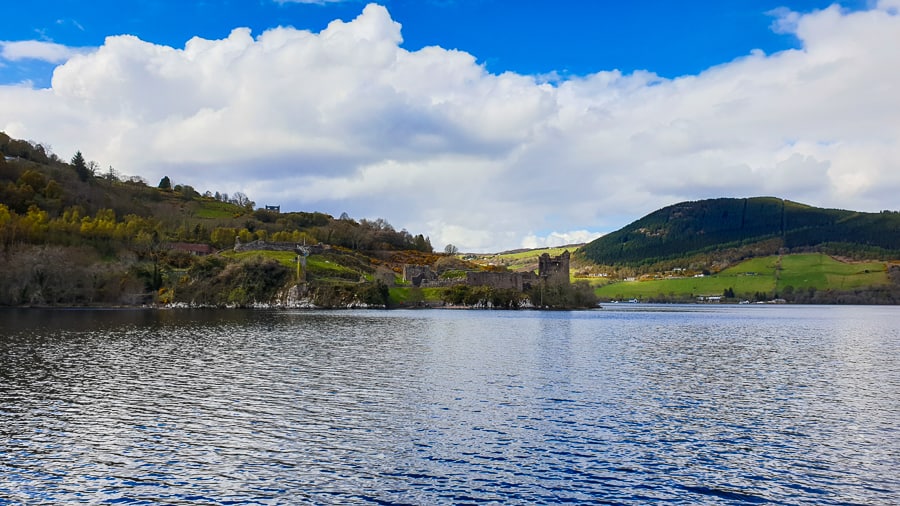
Even if you’re not into conspiracy theories, a visit to Loch Ness is worth a detour when visiting Inverness. We took a two-hour trip with Jacobite Cruises which was surprisingly informative, covering the geology of Loch Ness and the historical significance of the area. Oh, you get to see the atmospheric ruins of Urquhart Castle up close too. Am I forgetting anything? No, don’t think I am…Ok ok, there is a PLENTY to keep all you Nessie fans happy with fascinating commentary, theories and stories about the Loch’s most famous resident!
Inverness Notes
Lunch: Utopia Café, Hilton. Set up by an enterprising young owner after a spell away from Scotland, this incredible spot in unassuming Hilton offers locally-sourced, quality ingredients alongside a vibrant community vibe. This was one of our absolute favourite places we visited on our trip. I highly recommend swinging by for delicious salads, sumptuous cakes and fantastic coffee.
Dinner: The Mustard Seed Restaurant. Set in a converted church building, this award-winning restaurant offers delicious Scottish produce and a solid wine list too! On a warm day, try and snag a terrace seat for great views of the river.
Accommodation: Culliss House B&B. Located just a short walk south of the centre, we absolutely LOVED this B&B. The owners are extremely friendly, the rooms spacious and comfortable and the breakfast will get you ready for your first big driving day on the NC500!
Top Tip: Stock up on everything you may need on your North Coast 500 adventure. Many places along the route, even without COVID restrictions, have limited options for eating out. Opening hours of stores may also be different to what you are used to. Grab enough non-perishable food, snacks and drinks in Inverness so that you are never caught out. When it comes to clothing/equipment, make sure that you have everything you need before leaving Inverness. While there is an EXCELLENT outdoor store in Ullapool, it’s best to be prepared beforehand.
If I could do it again: I would have liked a little more time to explore around Inverness. Visiting Culloden battlefield for example or tackling the Moray Coast Trail. Inverness is also the ultimate stop of the Caledonian Sleeper train service from London. I would LOVE to arrive to Inverness in style next time I visit.
Day 1: Inverness to Auckengill
Inverness – Chanonry Point – Cromarty – Dornoch – Dunrobin Castle – Wick – Castle Sinclair Girnigoe
Departure and Arrival: 09:30 a.m – 7.p.m
Distance: 114 miles (direct), 152 miles (with all stops and detours)
We started the day with breakfast at our B&B before saying goodbye to our lovely hosts. North Coast 500 is very well signposted so we had no trouble navigating our way out of the city. However, we almost immediately went off-route as we wanted to check out the Black Isle, one of the highlights of the Highlands! The Black Isle (which isn’t actually an island but a peninsula), boasts charming villages, nature reserves and is one of the best places to spot dolphins in the world!
Chanonry Point and Cromarty
This was our aim as we arrived at Chanonry Point, where sightings are common. Presence of serious photographers congregating on the beach was promising but, sadly, we didn’t get to spot any. The views of the lighthouse, 18th century Fort George across the Moray Firth and the surrounding landscape somewhat made up for the lack of cetaceans!
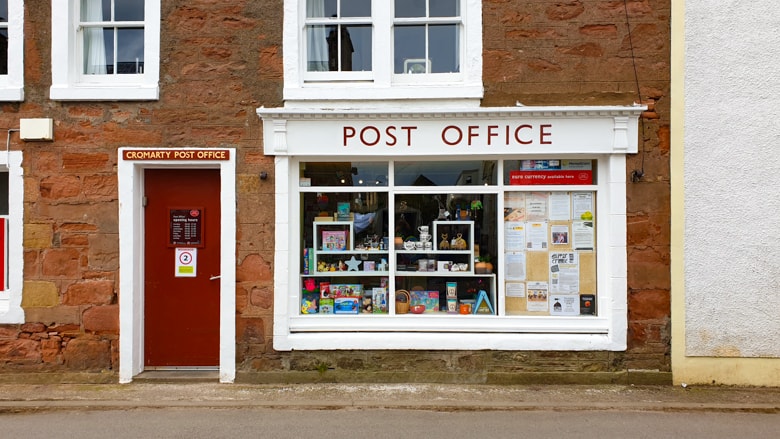
We continued on to quaint Cromarty, with its mixture of grand Victorian townhouses and simple fishermen cottages. Once an important fishing and trade hub, Cromarty’s fortunes have been up and down over the centuries but it’s still worth a stop and a wander. The excellent Slaughterhouse Coffee is a great place for your morning coffee fix too!
Dornoch
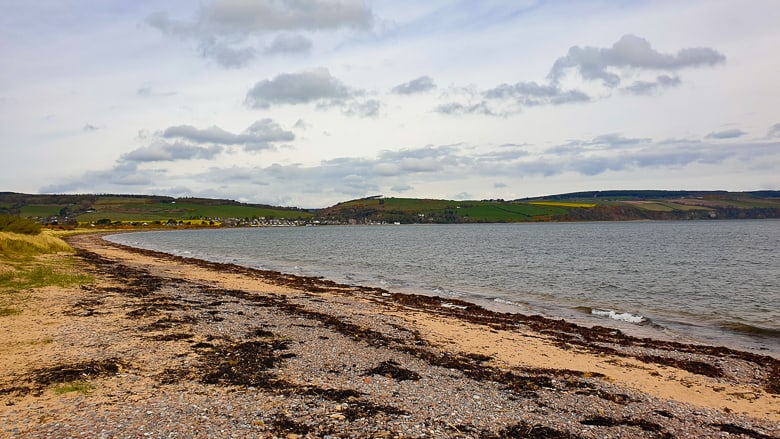
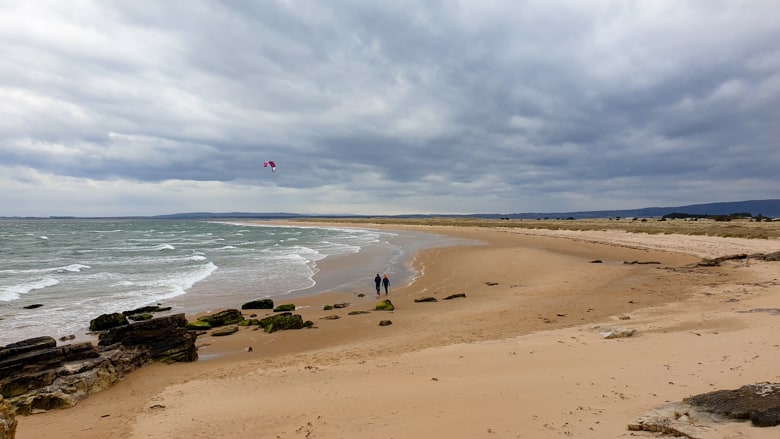
We headed along the north side of the Black Isle and eventually rejoined the NC500 proper just before Cromarty Bridge. Our next stop was Dornoch, a small town that’s definitely worth another detour. It boasts a 13th century Dornoch Cathedral as well as a beautiful beach, which we walked to after parking in town. It was the first of many stunning beaches along the NC500. Even though the weather wasn’t on our side, it was totally worth the wet and windy walk! Oh and golf fans will love the championsip-grade Royal Dornoch golf course in the town, voted one of the best in the world!
Dunrobin Castle
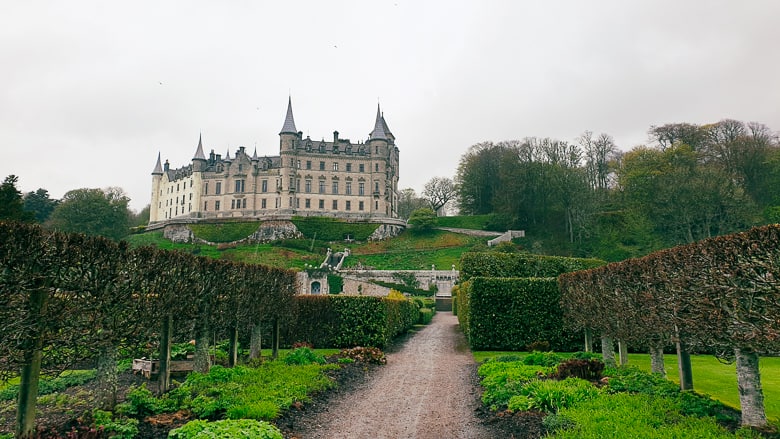
After lunch at Milk & Honey, we drove on to Golspie and one of our trip highlights – the opulent Dunrobin Castle & Gardens. Home to the Sutherland clan since the 13th century, it’s one of Britain’s oldest continuously inhabited houses but is open to visitors for a few months of the year. We took a self-guided tour through its lavish rooms, before taking a quick (and very wet) walk around the beautiful gardens. I would definitely recommend a visit, especially on a sunny day when you can enjoy the gardens, free falconry shows and stunning views of the North Sea.
Castle Sinclair Girnigoe
It was a very wet start to our North Coast 500 adventure, but the weather wasn’t going to stop us from exploring our last stop of the day – the atmospheric ruins of Castle Sinclair Girnigoe, a short detour from Wick. Perched precariously on a cliff edge, this incredible castle was originally built in the 13th century before undergoing multiple changes over time. The current 17th century layout is a mesmerising, Game of Thrones-like ruin that you can explore up close. Keep your eyes peeled for wildlife with many birds nesting in the surrounding cliffs and sea stacks!
We pushed on to our accommodation – a tiny self-catering cabin just a few miles south of John O’Groats. After a big day of exploration, we managed to slap up a tasty meal before cosying up and listening to the sound of the rain.
North Coast 500 Day 1 Notes
Points of interest: Black Isle – Chanonry Point, Cromarty, Dornoch, Dunrobin Castle and Gardens, Whaligoe Steps, Castle Sinclair Girnigoe
Lunch: Milk & Honey, Dornoch
Dinner: Self-catering Hillside Camping Pods
Accommodation: Hillside Camping Pods, Auckengill (around 7 miles south of John o’Groats)
Highlight: While the driving is not as spectacular as it gets in the coming days, it was fun to start the North Coast 500. Don’t skip the Black Isle even though it’s an early detour from the main route. Castle Sinclair Girnigoe was also super interesting to see.
If I could do it again: Unfortunately the weather made Whaligoe Steps inaccessible. Already closed due to restoration works, with barriers and warning signs in place, the pouring rain would have made the descent unsafe.
Day 2: Auckengill to Durness
John O’Groats – Duncansby Head – Dunnet Head – Farr Bay– Durness
Departure and Arrival: 08:40 a.m – 5 p.m
Distance: 96 miles (direct), 111 miles (with all stops and detours)
John o’Groats and Duncansby Head
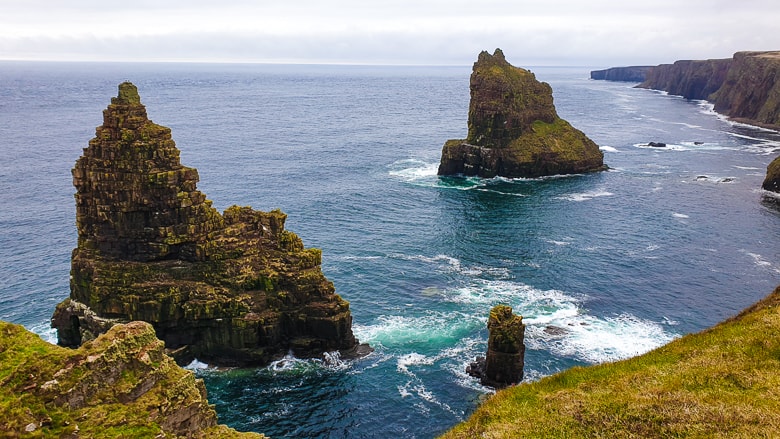
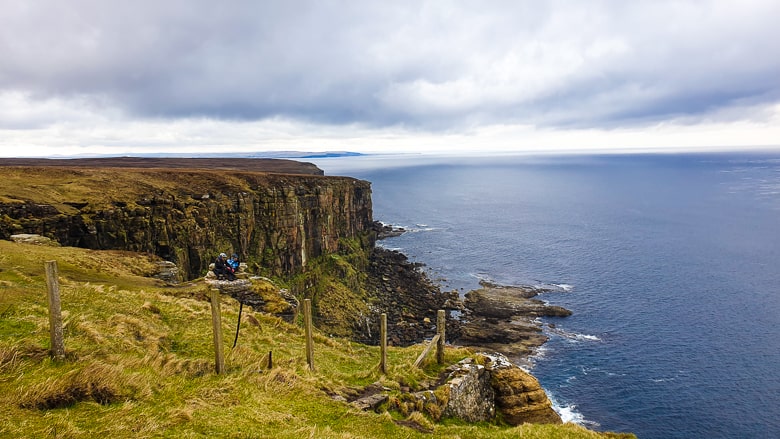
We were up bright and early to drive a few miles to John o’Groats to take photos of the famous signpost before the Sunday daytrippers arrived. We then headed east to Duncansby Head, the actual northeastern-most point of mainland Britain. The lookout offers great views of the Orkney Islands just across the Pentland Firth and Dunnet Head. The real highlight, though, was the walk across vast clifftop fields to Duncansby Stacks. Sitting just offshore, the twin jagged rock stacks almost appear to guard the cliffs behind them from unknown invaders. The area is also a well-known seabird colony for thousands of guillemots, kittiwakes, razorbills and even puffins among others! Geo of Sclaites, a huge cleft in the rock on the way to the stacks is a great place to spot them!
Dunnet Head
After grabbing coffees and a packed lunch at Stacks Bistro back in John O’Groats we continued on, passing Castle of Mey, holiday home of the Queen Mother for over 40 years. Next up, was Dunnet Head, mainland Britain’s most northerly point. The views here were even more special, extending across the entire north coast from Duncansby Head all the way to Cape Wrath some 60 miles west. We even spotted puffins and seals far below thanks to kind fellow travellers who let us use their binoculars!
After passing through Thurso, we finally got round to having our lunch at Farr Bay beach, near Bettyhill. The beautiful white sand beach was the perfect place for a break. We also walked to see the ancient Farr Stone just outside Strathnaver Museum nearby.
Durness
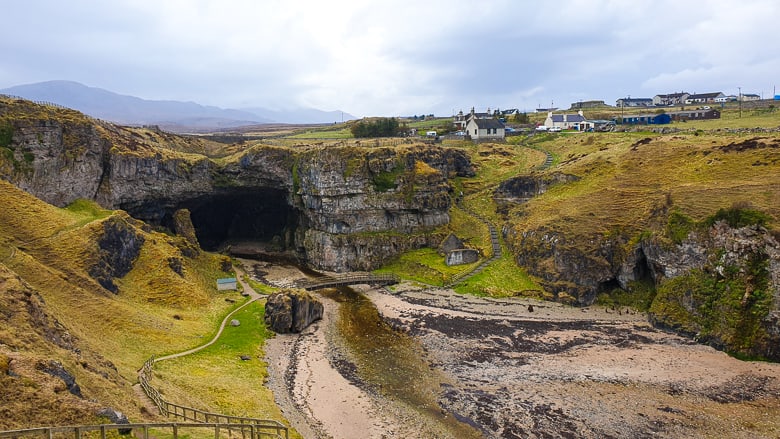
Having got used to the single-track road by now, we took in the awesome scenery, stopping frequently at viewpoints including the causeway over the picturesque Kyle of Tongue and dodging wayward sheep. It was a pretty big driving day and we finally reached Durness just after 5pm. After dropping our stuff at our B&B, we explored spectacular Smoo Cave nearby. We descended the steps to the large sea cave entrance and saw the impressive waterfall chamber beyond.
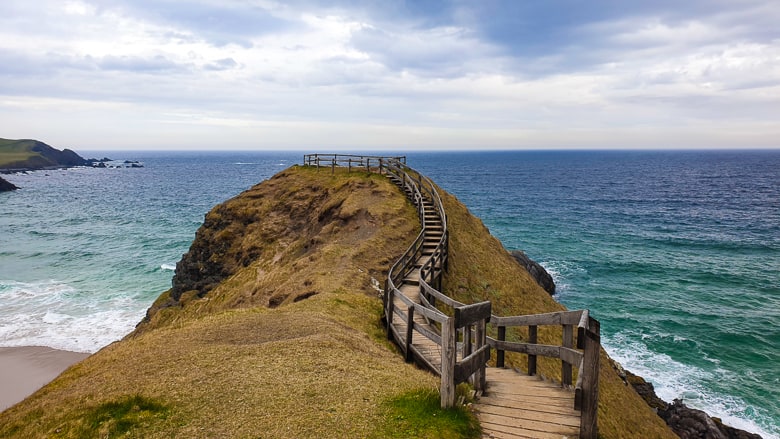
We even had time to wander to the spectacular Sango Bay viewpoint, with panoramic views of the rock-strewn beach and the surrounding cliffs. There was a campsite above the beach, offering what might be one of the best views to wake up to in the whole country!
North Coast 500 Day 2 Notes
Points of interest: John O’Groats, Duncansby Head, Dunnet Head, Farr Bay, Smoo Cave, Sango Bay Viewpoint
Lunch: Packed flatbreads from Stacks Bistro in John o’Groats
Dinner: Smoo Cave Hotel, Durness
Accommodation: Smoo Lodge B&B, Durness
Highlight: Wildlife spotting at Dunnet Head where we saw seals, puffins and guillemots. Being at the northern tip of mainland Britain was also pretty cool. We also stumbled upon a hidden gate at Duncansby Head. It allowed us to get a closer look at the nesting birds.
If I could do it again: We really wanted to hike Ben Hope which is located between Tongue and Durness so in hindsight we needed a much, much earlier to start to make it work. It was also a Sunday so, unfortunately, the award-winning Dunnet Bay Distillery was closed. We would have loved a tour. Tip: The Store Café in Bettyhill sells distillery produce without marking up prices! Finally, it would have been cool to have a look around Thurso.
Day 3 – Durness to Culkein Drumbeg
Durness – Balnakeil Beach – Sandwood Bay – Oldshoremore Beach – Kylesku – Culkein Drumbeg
Departure and Arrival: 08:40 a.m – 8 p.m
Distance: 48 miles (direct), 66 miles (with all stops and detours)
After one of the best breakfasts we’ve had in a long time (including Korean dishes courtesy of the owners), we set off on our way. It was a sunny morning, so we made a couple of stops for photos at Sango Bay (yes, again, it’s amazing) and Balnakeil Beach. We also wanted to try the famous hot chocolates from Cocoa Mountain at Balnakeil but they were closed for a training day.
Sandwood Bay and Oldshoremore Beach
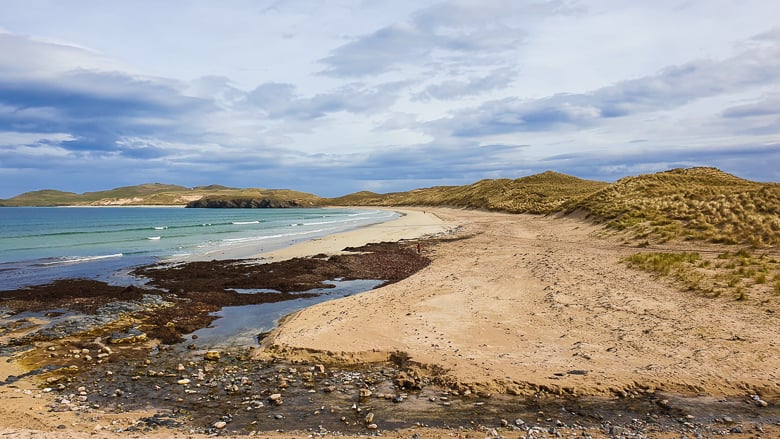
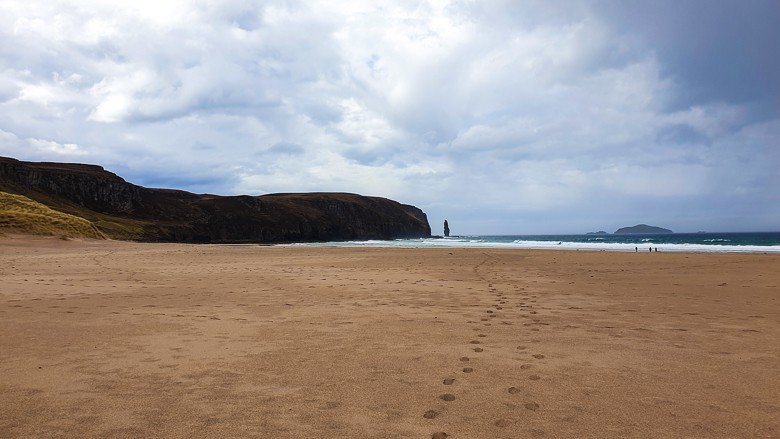
We followed the signs for Kinlochbervie and then followed the narrow road to the carpark in Blairmore, the start of a hike to the remote Sandwood Bay Beach, one of the most wild and unspoilt in the UK. The 8 mile (check km) round trip walk – the only way to reach the beach – was pretty flat and straightforward. Once there, we were treated to a stunning sand beach, towering dunes and the remarkable Am Buachaille sea stack.
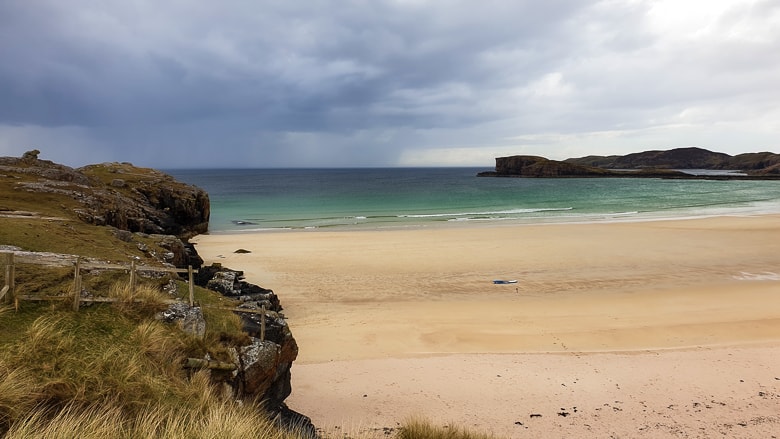
Back at the car, we took another detour and walked along spectacular Oldshoremore Beach – one of those places that you would never guess is in the UK!
Assynt and Kylesku
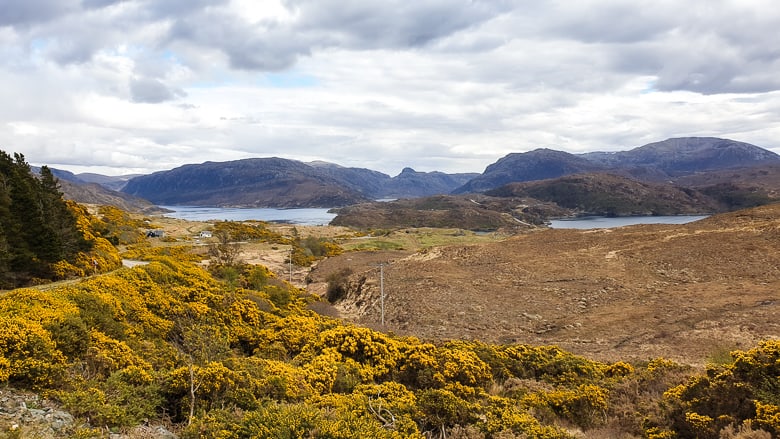
We rejoined the main NC500 road and continued south. We were entering a stunning region called Assynt – from the Norse word meaning “a rocky ridge”. It certainly lives up to its name too with mountains in almost every direction. There are plenty of viewpoints along the road too so build in time to stop for photos and walks.
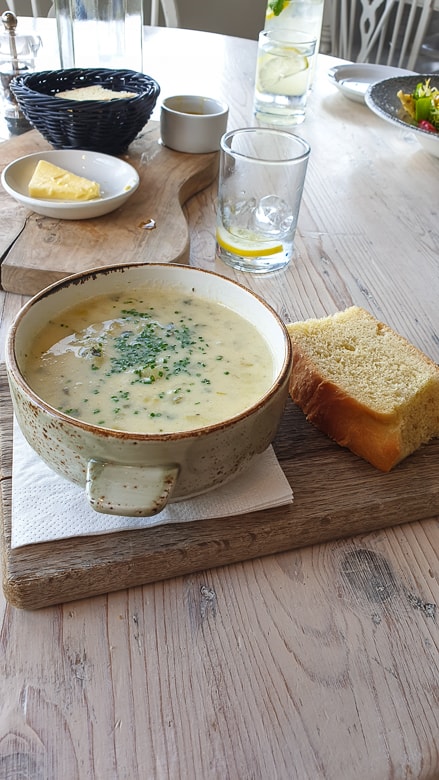
We reached Kylesku around 5pm and decided to have an early dinner at the Kylesku Hotel. Our accommodation for the night was in a relatively remote area so we didn’t want to risk going hungry. Luckily the Kylesku Hotel comes highly-recommended and the food was great. We even enjoyed G&Ts on the terrace outside despite the drizzle.
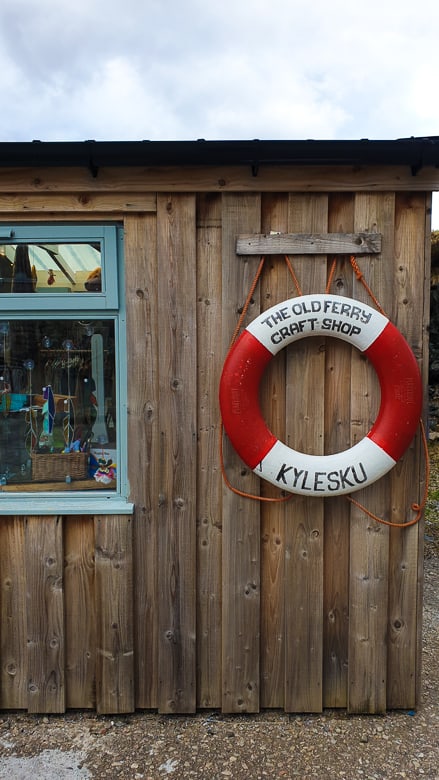

Kylesku to Drumbeg
Next up was probably one of our favourite sections of the entire route. The winding switchbacks of the single-track road that the NC500 follows offered some of the best views of the whole trip. The landscape was almost otherworldly – rocky slopes, deep lochs and open heathland. We managed to spot red deer grazing just metres from the road. (Bear In mind that there is a detour in place for larger vehicles which continue along the A894 towards Lochinver, avoiding this section).
Eventually, we reached a small village of Drumbeg and stopped at a viewpoint overlooking the surrounding islands the coastline. Soon after we pulled into the driveway of Tor Druim, our B&B which provided possibly the best view I’ve ever woken up to!


North Coast 500 Day 3 Notes
Points of interest: Durness, Balnakeil Beach, Sandwood Bay, Oldshoremore Beach, Kylesku, Drumbeg
Lunch: We had a big breakfast and an early dinner so skipped on lunch. There are places near Kinlochbervie that we didn’t stop at.
Dinner: Kylesku Hotel (it’s award-winning and a VERY popular place for food)
Accommodation: Tor Druim, Culkein Drumbeg
Highlight: The hike to secluded Sandwood Bay was worth it despite the rain. The views from Tor Druim were fantastic too but for me it was the single track driving between Kylesku and Drumbeg, stoppng to take in the views and seeing the incredible deer so close to the road
If I could do it again: Cape Wrath – mainland Britain’s northwestern-most point. Now we had no chance of seeing it as the area was closed for MOD training AND the ferry/buses weren’t running due to COVID-19. Definitely something I would want to do if I had the chance, though. Cocoa Mountain was also sadly closed for training on the day we came.

Day 4 – Culkein Drumbeg to Lochinver
Culkein Drumbeg – Clashnessie – Old Man of Stoer – Achmelvich Beach – Lochinver
Departure and Arrival: 09:55 a.m – 16:10 p.m
Distance: 13.8 miles (direct), 26.5 miles (with all stops and detours)
We took our time and enjoyed the stunning views from outside our window and the delicious breakfast in the sun-filled dining area. After saying our goodbyes, we swung by Drumbeg Stores in the village. It’s a great place to stock up on provisions and artisan produce.
Clashnessie
Next up, we drove to a tiny village of Clashnessie to hike to its namesake waterfalls. We’ve built in more days along the western coast of the NC500 into our itinerary specifically so we could enjoy the scenery and do as many walks/hikes as possible. After a short walk to the falls, we continued on Stoer Lighthouse, the starting point of our next hike.
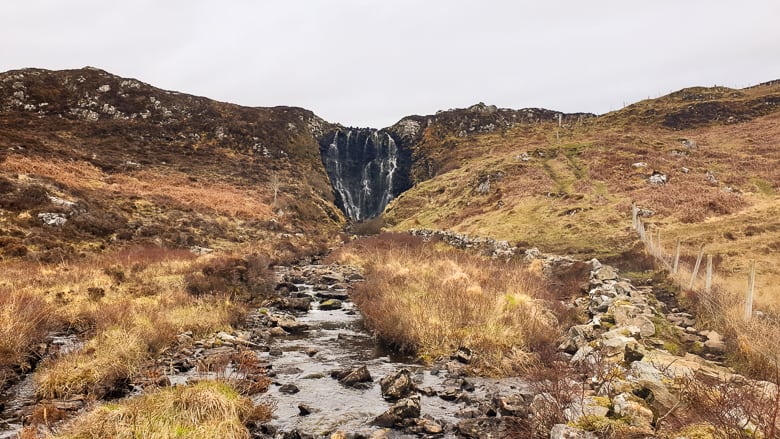
Old Man of Stoer
The Old Man of Stoer (not to be confused with the more famous Old Man of Storr on Skye), is a sandstone sea stack accessed by a cliff-edge path. It’s pretty rough and tough to follow in places but sticking close to the edge is the way to go. The views of the sea are fantastic, and this walk is considered one of the best for whale and dolphin spotting. After reaching the impressive stack, we followed the outline of the cliff before making our way back over the big hill and past a trig point. Even the rain and the very boggy ground didn’t dampen our spirits.
We rewarded ourselves with coffees and cake from the tiny Choc-o-Latte in Clashmore, chatting with the super friendly Belgian owner before picking up some delicious local produce from The Jammery in nearby Culkein.
Achmelvich Beach and Lochinver
Next, we swung by the stunning Achmelvich Beach – another popular sliver of sand along the NC500. It was raining so we had a little walk around before continuing on to Lochinver. The plan was to find somewhere to eat in the town, as Lochinver is often touted as a foodie hotspot. with a number of great places like Peet’s, An Cala Café and the famous Lochinver Larder, celebrated for its incredible pies. Unfortunately, these were either closed due to the COVID restrictions or all booked up. We eventually wound up with a fish and chips dinner back at Achmelvich Beach. As luck would have it though, the sun came out and we had an unparalleled dinner view from our table.

North Coast 500 Day 4 Notes
Points of interest: Drumbeg Stores, Clashnessie Beach and Falls, Old Man of Stoer, Achmelvich Beach, Lochinver
Lunch: Choc-o-Latte
Dinner: Fish and chips, Achmelvich Beach
Accommodation: Tarradh Rooms, Lochinver
Highlight: Old Man of Stoer was a sensational cliffside walk for sea views and to see the incredible stack. Overlooking Achmelvich Beach in glorious evening sunshine was also special.
If I could do it again: We would have pre-booked somewhere for dinner in Lochinver. It has a foodie reputation but due to COVID a few places were closed and others were super busy. An Cala Café and Peet’s were highly recommended. Having said that, IF you like fish and chips (I really really don’t) and the weather is good, Achmelvich Beach is a really special place for dinner.

Day 5 – Lochinver to Ullapool
Lochinver – Stac Pollaidh– Loch Assynt – Knockan Crag– Ullapool
Departure and Arrival: 09:55 a.m – 16:10 p.m
Distance: 31 miles (direct via Inverkirkaig), 36 miles (direct via Loch Assynt and Knockan Crag), 67.5 miles (with all stops and detours)
It was an early start to another day exploring Assynt as we drove out of Lochinver. Instead of taking the faster A837, we headed down yet another detour through Inverkirkaig. It was back to the familiarly spectacular single-track roads as we wound through mountains and moorlands towards our first stop of the day.
Stac Pollaidh
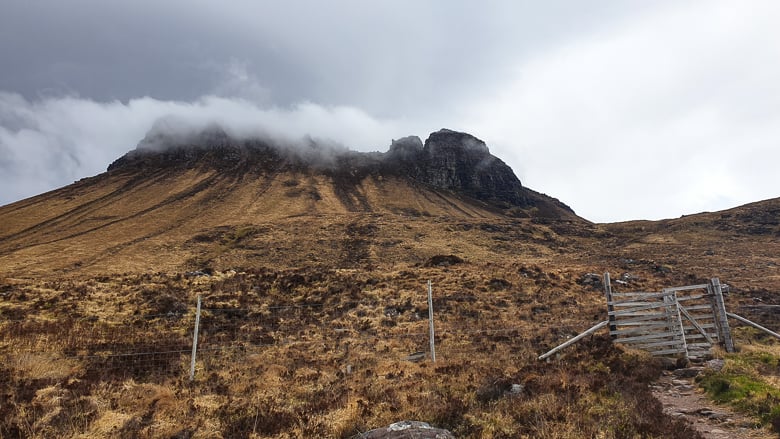
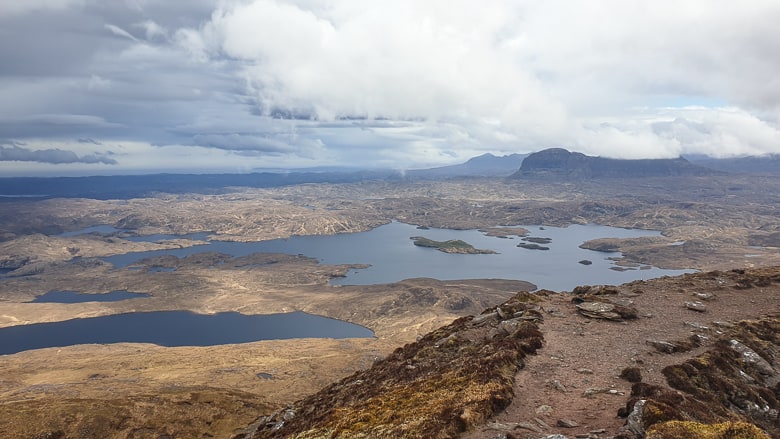
Stac Pollaidh (often referred to as Stac Polly) is one of the best-known mountains in the region and very popular with hikers. We parked up and started our ascent along an excellent path. It climbed quickly, offering spectacular views across Loch Lurgainn. The path winds through moorland before curving round and eventually climbing to the ridge. It’s possible to just do a loop around the base of the mountain but the views from the ridge are spectacular so a bit of extra effort is worth it.
Once at the top, you can try and reach the true summit of Stac Pollaidh but it requires a high level of scrambling experience – it’s even considered one of the toughest summits in Britain to conquer. I tested my mettle and just about passed – my reward was incredible views in every direction!
After making our way down the mountain, we needed to replenish all those calories. After reaching the T-junction at Drumrunie, we headed back north and stopped at Elphin Tearooms for a hearty lunch. We watched sheep and their lambs outside the café’s windows as we enjoyed soup, toasties and delicious cakes (the awesome Aussie owner even bakes Down Under classics like ANZAC biscuits and lamingtons!).
Ardvreck Castle and Knockan Crag
We wanted to check out Ardvreck Castle so continued driving north to explore the moody ruins on the banks of Lake Assynt before double backing on ourselves and heading towards Ullapool. There was time for one more stop though – Knockan Crag National Nature Reserve provides a fascinating geology lesson on the surrounding landscape with educational walks for all abilities.


Ullapool
Afterwards, it was time for a much-deserved dinner and drinks in our private lounge at our hotel in Ullapool. I took a quick walk before dinner and loved the feel of the town. It’s bustling and unpretentious and while most people use it as a jumping off point to the islands of Lewis and Harris, I definitely would love to linger longer on a future visit. It’s also home to The Seafood Shack – a super popular and multi award-winning foodie favourite. We would have LOVED to eat there but we already had a dinner reservation and just wanted to be indoors after a long day exploring.


North Coast 500 Day 5 Notes
Points of interest: Stac Pollaidh hike, Ardvreck Castle, Loch Assynt, Knockan Crag, Ullapool
Lunch: Elphin Tearooms
Dinner: Ceilidh Place
Accommodation: Ceilidh Place, Ullapool
Highlight: Undoubtedly hiking Stac Pollaidh and then scrambling up to the main summit. It is supposedly one of two toughest in mainland Britain due to the final stack. Also, Ullapool is an underrated gem – I really loved its unpretentious vibe and I thought that it felt “real”
If I could do it again: Building in even more time in Assynt would be even better. I would love to hike to the summit of Suilven someday. Needless to say, a side trip to Lewis and Harris from Ullapool would also be amazing.
Day 6 – Ullapool to Applecross
Ullapool – Corrishaloch Gorge– Inverewe – Gairloch– Applecross
Departure and Arrival: 10:40 a.m – 18:45 p.m
Distance: 117 miles (with all stops and detours)
After breakfast we took another walk around Ullapool, grabbing great coffees from Café Margot (their onsite bakery looked amazing!). We explored the town, checking out the Ullapool Clock, rows of pretty terraced houses and the harbour. There are a couple of great independent bookshops in town too.
Corrieshalloch Gorge
We left Ullapool and continued south along the A835. After about 12 miles, we followed the NC500 signs and turned off towards Corrieshalloch Gorge National Nature Reserve. A couple of short trails offer some fantastic views of the gorge that’s been shaped by glacial meltwater over thousands of years. The highlight is a suspension bridge that overlooks the Falls of Measach dropping into the canyon below. It’s definitely worth a stop, especially as it’s literally on the route.
Inverewe Garden
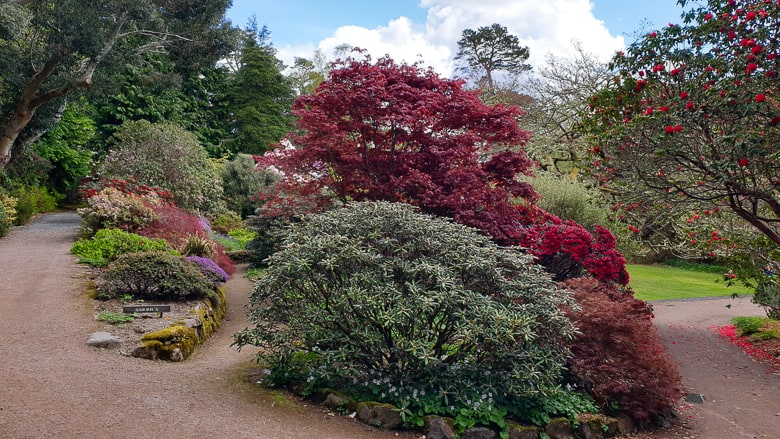
The views today are incredible and there are plenty of lookout points to stop at and beaches to explore. We stopped at Gruinard Beach to stretch our legs before continuing on. As we were nearing Poolewe while studying the guidebook, we spotted an entry on Inverewe Garden. A botanical garden that utilises the effects of the Gulf Stream to showcase plants from all over the globe in the Scottish Highlands sounded like fun so we decided to visit. It turned out to be a real highlight – the diversity of flowers and trees was incredible. We especially loved losing ourselves along the rhododendrons, Californian redwoods and bamboo groves.
Gairloch
We reached a pretty village of Gairloch with its sandy beaches and impossibly beautiful views of the rolling countryside and the surrounding islands, including Skye. We stretched ourselves pretty thin with the distance we needed to travel, so we didn’t have any time to explore beyond a quick stop at excellent Coast Coffee for a snack.
Victoria Falls and Beinn Eighe National Nature Reserve
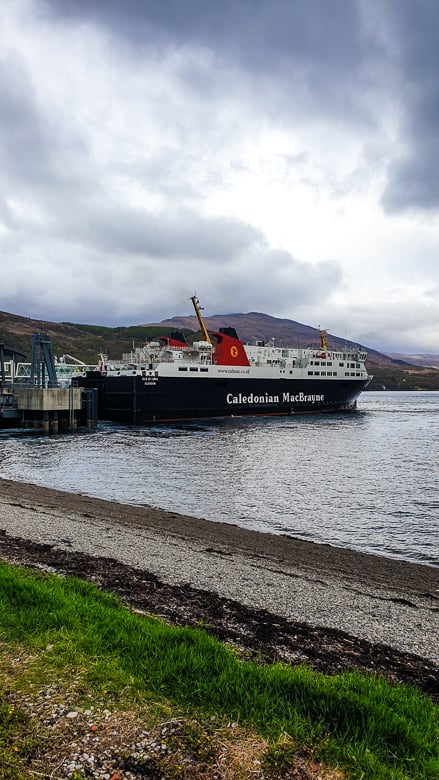
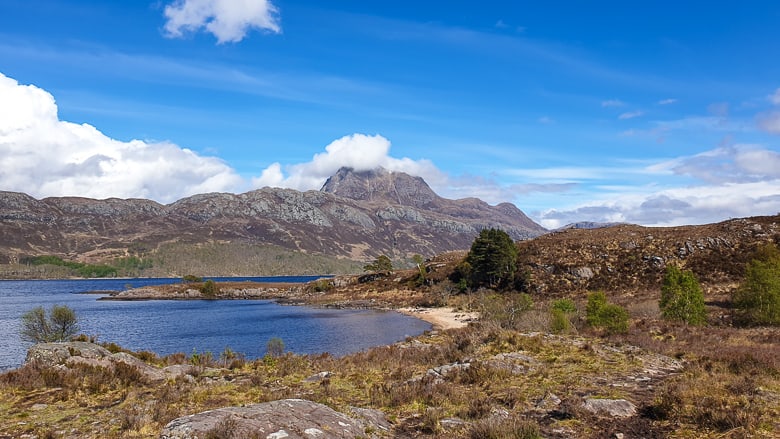
Next up was a quick stop at Victoria Falls just a stone’s throw from pretty Loch Maree. It’s a really quick walk to the waterfall which is well worth stopping for. The drive alongside the Loch is very scenic with the silhouette of Slioch dominating the views. We would have loved to explore some of Beinn Eighe National Nature Reserve’s trails but time wasn’t on our side.
Torridon and Applecross Peninsula
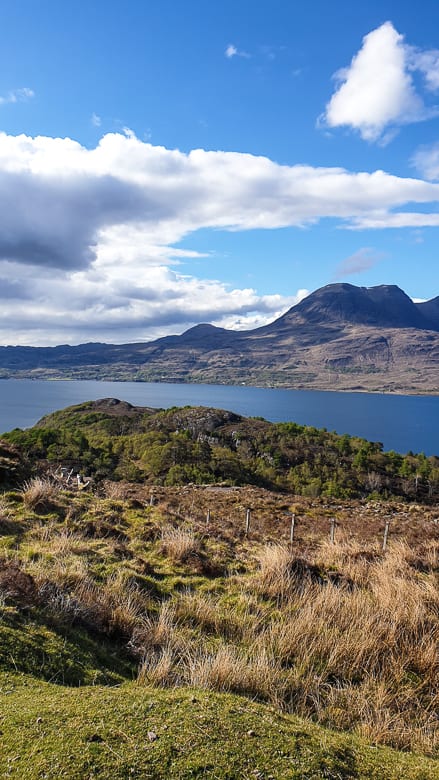
At Kinlochewe, we turned off towards the Applecross Peninsula. The landscape between here and Torridon is breathtaking. I had to stop multiple times just to get photos and names of trails I wanted to attempt in the future. We passed pretty Torridon which overlooks its namesake Loch and soon were navigating the countless switchbacks on the peninsula proper.
The narrow single track road with blind corners and countless sheep in the way doesn’t make for the most stress-free driving experience but the stupendous views of Raasay, Rona and Skye definitely made up for it. It was almost 7 o’clock when we finally pulled in to Applecross after a loooong driving day.
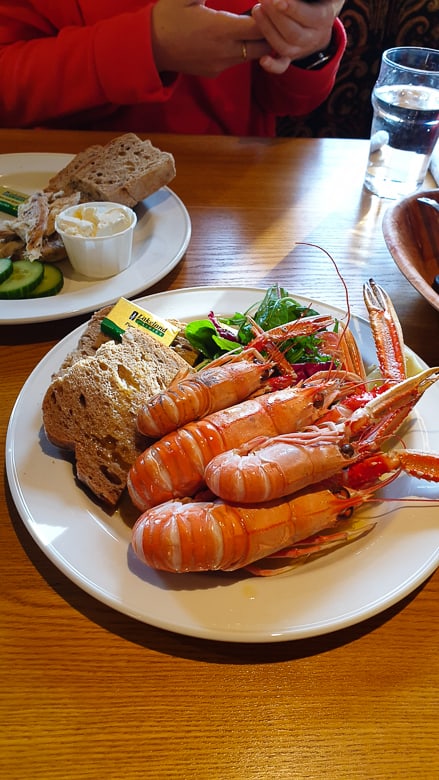
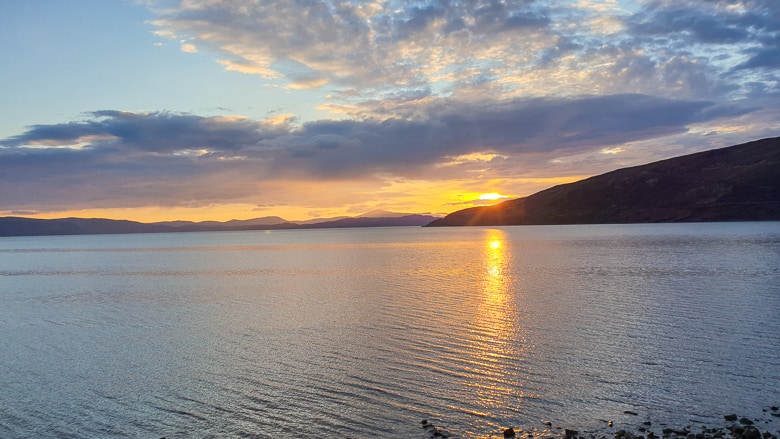
We stayed at the famous Applecross Inn and had a delicious dinner of fresh langoustines and other delectable seafood. Afterwards, we took a relaxing stroll along the Inner Sound, taking advantage of a late sunset this far north. We still weren’t quite sure what our plan was for the next day but we did have an exciting activity booked for the morning!

North Coast 500 Day 6 Notes
Points of interest: Corrieshalloch Gorge, Gruinard Beach, Inverewe Garden, Gairloch, Victoria Falls, Beinn Eighe National Nature Reserve
Lunch: Coast Coffee, Gairloch
Dinner: Applecross Inn
Accommodation: Applecross Inn, Applecross
Highlight: There are plenty of awesome places to stop and explore but the scenery really ups the ante from Gairloch onwards. First, the stunning Loch Maree with the unmistakeable contour of Slioch always drawing your eyes off the road. Then after the Kinlochewe turn off, beautiful landscapes until Torridon and then the winding roads as you head onto Applecross Peninsula. The final stretch of driving allows incredible views of Rona, Raasay and Skye in the distance
If I could do it again: Probably the only day on this itinerary that we would change if we had the opportunity. The drive from Ullapool and Applecross is simply too long to fit in everything along the way. We had later start to the day because we had a nice walk around Ullapool. As a result we had to rush through Gairloch which I feel deserves at least a couple of hours. There are also a number of trails in Loch Maree area/Beinn Eighe that we would love to do. Not to mention the hikes on the stunning stretch between Kinlochewe and Torridon
Day 7 – Applecross to Inverness
Applecross – Bealach Na Ba Pass – Rogie Falls – Inverness
Departure and Arrival: 13:25 p.m – 17:00 p.m
Distance: 117 miles (with all stops and detours)
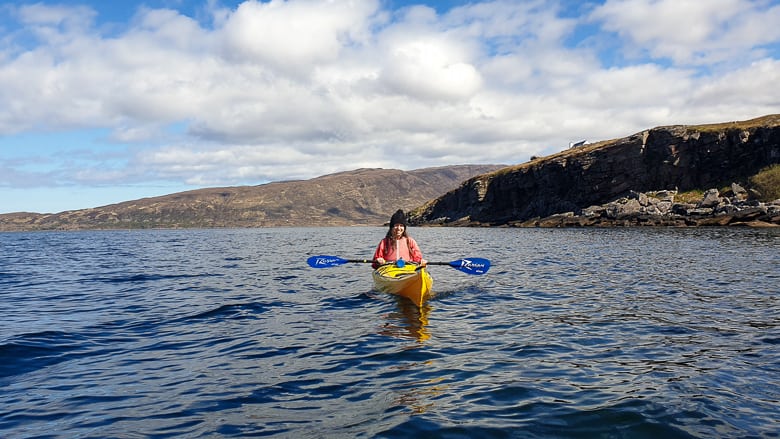
We didn’t have to go far for our first activity of the day. Mountain & Sea Guides offers sea kayaking tours ranging from short introductory sessions to multi-day trips that include camping on beaches. We opted for the half-day tour which included all equipment, thorough safety briefing and a guided tour along the coast. I’ve kayaked before in Australia and Croatia but the cold water in this part of Scotland provides its own unique challenges.
Luckily we didn’t have to put our capsizing training into practice but we did feel like we got a full body workout once we arrived back to Applecross.
Bealach na Ba
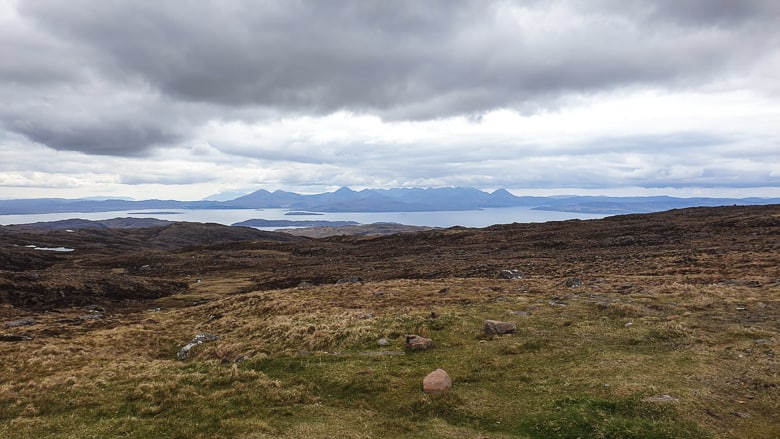
It was time to tackle Bealach Na Ba pass – one of the highlights of the NC500 and a test for drivers of larger vehicles with the tight switchbacks giving you limited opportunities to enjoy the scenery. This is also one of the reasons why I would recommend driving the NC500 anti-clockwise to those drivers that are less confident – you work your way up to roads like this rather than tackling them head-on on Day 1.
We made an obligatory stop at the Bealach Na Ba viewpoint at the top of the pass and continued down the other side towards Lochcarron. The pass is often sighted as one of the top highlights of the NC500, but honestly, I thought there are much better views elsewhere along the route.
We stopped at the Kishorn Seafood Bar on the recommendation of our sea kayaking guide and we weren’t disappointed. Our table was soon laden with delicious fresh seafood and sushi. It was a fitting last meal along the route that passes through so many fishing communities.
Rogie Falls
When planning this trip, we considered going towards Ben Nevis or maybe even Isle of Skye on our way home. This would have meant leaving the NC500 route a few miles before its end back in Inverness. However, we decided that we would just head home a day early and have a relaxing last day before returning to work. The fastest route was to go through Inverness, so we decided to complete the full loop of the NC500 after all. The last few miles were pretty uneventful, but we did take time to stop at Rogie Falls to complete a short hiking circuit to see the waterfall.
Inverness
Just a short while after, we found ourselves back in Inverness. After 7 days of driving along single-track roads, through small villages and remote wilderness, it felt almost as if we were thrust into the heart of London or New York, so jarring was the contrast between the locations. Nevertheless, we couldn’t have asked for more from our NC500 adventure. From stunning lochs and white sand beaches to delicious local produce and friendly communities we visited along the way, this was a roadtrip like no other. Ok, I tell a lie – we could have asked for more. More time to enjoy the incredible wonders of this fascinating corner of Scotland.
North Coast 500 Day 7 Notes
Points of interest: Sea kayaking in Applecross, Bealach na Ba pass, Rogie Falls
Lunch: Kishorn
Highlight: The sea kayaking was super fun and it’s something I want to do more of going forward!
If I could do it again: I would love to do a multi-day kayaking trip. It’s possible to do longer trips including camping on surrounding islands with Mountain & Sea Guides
Pin it for later:


6 Comments
Linda Kouwenhoven
August 6, 2021 at 3:56 pmWhat a fantastic guide to that road and the areas there in general. Such amazing scenery and gorgeous photographs. Would love to add this to a bucket list. Thanks for sharing!
Travel Lexx
August 21, 2021 at 11:32 amThank you Linda! It’s an incredible area and definitely recommend a visit!
Clazz - An Orcadian Abroad
August 7, 2021 at 10:50 pmFantastic post, Lexx! Love how much detail you’ve put into this. I’m so glad you loved Assynt, it’s definitely my favourite area too (err, in case you hadn’t guessed from my ramblings). I think in the time you had, it would have been hard to cut out anywhere else to give yourself more time there though, so you did well to fit in what you did! Same with the Ullapool – Torridon day, we had to skip Gairloch altogether for that reason. I’ve definitely got to get to Sandwood Bay and Oldshoremore as I haven’t been to either of those. You didn’t miss much in Thurso, by the way! 😛
Travel Lexx
August 21, 2021 at 11:30 amAh thank you, definitely used your post loads for research when planning our trip so that was fantastic. Yeah, you always want a little more time and it would have been amazing to have that extra day between Ullapool-Torridon/Applecross but we can’t have any complaints!
Dan and Beck
December 18, 2021 at 11:27 amHi Lexx,
Thank you for posting such a great NC500 itinerary.
We used your itinerary to help plan our trip. We found out about Rogie Falls from this page and we really loved visiting there. We did the NC500 in a clockwise direction so it was actually the first main attraction that we saw!
If you or your readers are interested, we have written a more hiking focussed guide on the best 18 trails along the NC500 here: https://travelmademedoit.com/nc500-hikes/
We really like your website, and have followed you on IG. We look forward to your upcoming travels!
Cheers, Dan & Beck from Travel Made Me Do It
Carolin
January 23, 2022 at 12:55 pmBeautiful pictures and highly informative, thanks for sharing your honest experience. I agree, most road trips are cut way too short and you’ll end up with too much crammed into a short amount of time. 10 days would be a good amount to see, hike and eat your way around a road trip of a size like this one.
Carolin | Solo Travel Story